Withholding Taxes: The Silent Killer of Cross-Border Returns
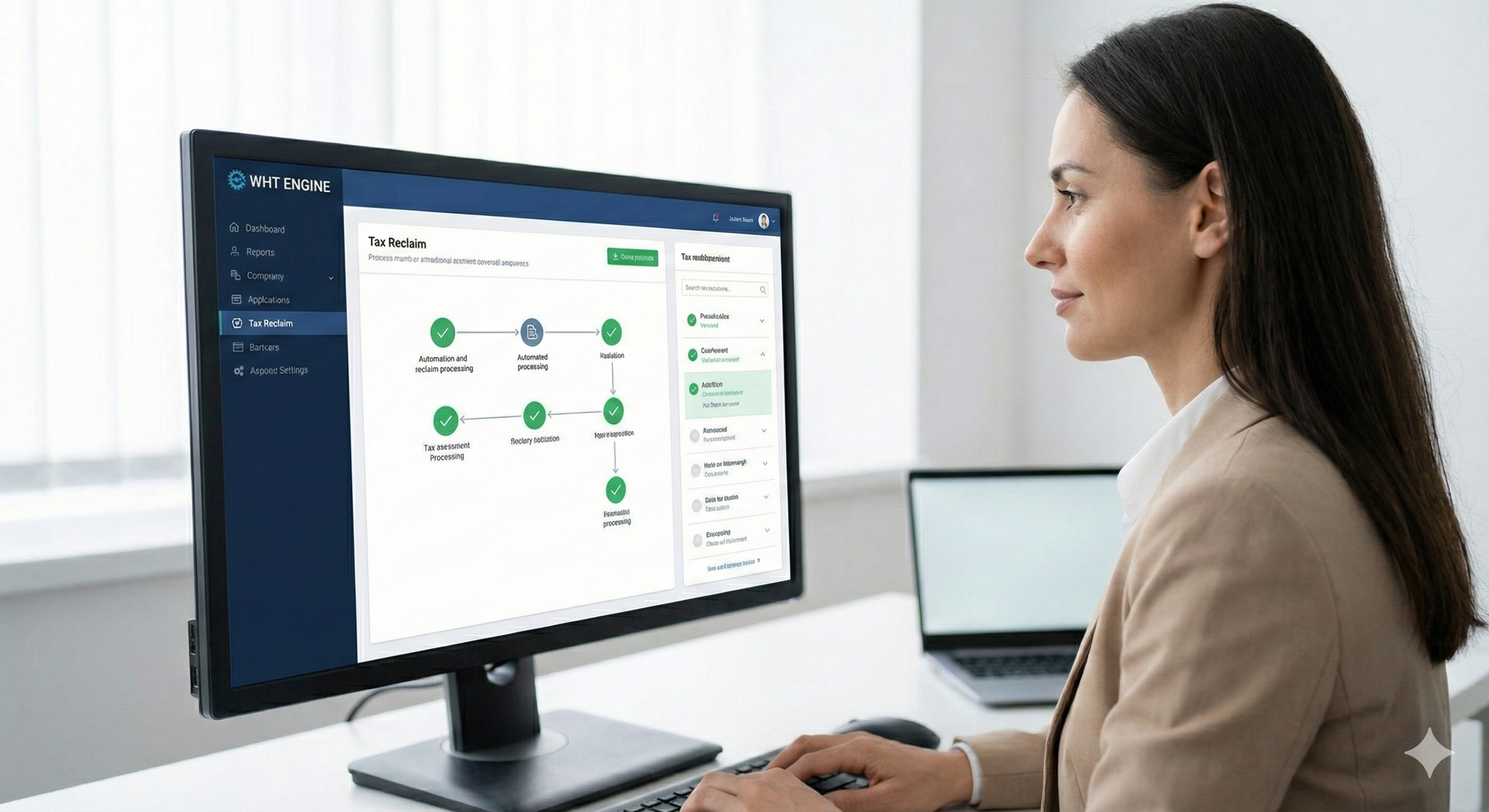
Cross-border returns often die by a thousand cuts: withholding tax, missing forms, rejected treaty claims, and slow reclaims. Model gross-to-net by income type, treaty position, and documentation. Use the WHT engine and the Modeling Sheet.
A portfolio can be perfectly built and still underdeliver.
The fund owns what it meant to own. The dividend arrives. The interest coupon pays. A royalty stream hits the account. The distribution shows up on the statement.
Then the tax leakage appears as a line item no one argued about in the investment committee memo, and it keeps appearing because it is procedural, not philosophical.
Withholding tax is the default for many cross-border payments. Treaties can reduce the rate, but only when you qualify and only when you can prove you qualify. The most common failure mode is not the treaty rate itself. It is the conditions attached to it.
In the OECD Model Tax Convention on Income and on Capital, the dividend, interest, and royalty articles are drafted around a consistent idea: the source state may tax at a limited rate, but reduced rates commonly depend on who is treated as the “beneficial owner” and whether the recipient is entitled to treaty benefits in the first place.
Now add real-world plumbing:
the payer or custodian wants a specific form
the form needs a valid tax identification number
the treaty claim needs the right article and the right status
the beneficial ownership story must be credible
the reclaim, if required, may take months or longer, and the portfolio’s cash flow model rarely budgets for that
For a global allocator, that is not “tax admin.” It is return risk.
MARKET & CAPITAL REALITY CHECK
Treaty rates are conditional, and the conditions are where returns leak
The five reasons treaty WHT relief fails in practice
Wrong form, wrong section, or expired documentationIn the Internal Revenue Service framework, claiming treaty benefits for non-personal services income generally uses Form W-8BEN or W-8BEN-E, and personal services treaty claims use Form 8233. The IRS also stresses that reduced withholding typically applies only when the required form and required TIN certifications are provided.
Entity type mismatch, including hybrids and flow-through complexityEven sophisticated teams trip over hybrid entities and documentation routing. The W-8 instructions explicitly call out that hybrid entities claiming treaty benefits must use the appropriate form path.
Beneficial owner and anti-abuse challengesTreaty entitlement can collapse if the recipient is treated as a conduit. Anti-abuse minimum standards under BEPS Action 6 target treaty shopping and shape how countries deny benefits in “inappropriate circumstances.”
Custodian and withholding agent process differencesOperationally, the withholding agent may apply a default statutory rate if anything in the file looks incomplete, then leave the investor to pursue a refund. The IRS also details reporting rails such as Form 1042-S reporting, which institutionalizes the data trail and reinforces why the file needs to be consistent.
Reclaim timelines and administrative frictionIn many jurisdictions, reclaim is a separate workflow with specific portals, sequencing, and evidentiary requirements. For example, the Federal Central Tax Office (BZSt) describes that applications for withholding tax relief must be submitted via its online portal, and it provides a dedicated relief process and forms guidance.
Cross-border income is not a single category. Dividend withholding behaves differently than interest. Royalties behave differently than service fees. Some payments may be treated as business profits and shift into permanent establishment logic rather than simple withholding, depending on facts and treaty drafting. The OECD Model is structured precisely because income type changes the allocation of taxing rights across articles.
The practical takeaway: a portfolio that models a single “assumed WHT rate” is usually lying to itself.
THE PLAYBOOK
Build a WHT engine, then run every position through it
Who this playbook is for:
allocators with cross-border equity and fixed income exposure
private credit and royalty investors
founders investing through holding entities or SPVs
anyone relying on treaty rates inside a cash flow model
Conditions that need to be true:
you will model gross-to-net before committing capital
you will treat documentation as part of underwriting
you can maintain a repeatable “treaty pack” per structure
Step 1: Build the simple WHT engine
Your engine can be one spreadsheet tab, but it must force the real inputs:
Country of source × income type × recipient entity × treaty position × documentation status = expected net + reclaim plan
Minimum columns that change outcomes:
income type (dividend, interest, royalty, service fee)
statutory WHT rate in the source jurisdiction
treaty rate and the exact treaty article
whether reduced rate is relief-at-source or refund-based
beneficial ownership and anti-abuse flags
required documents and expiry dates
expected reclaim timeline and cash drag cost
Step 2: Create the WHT documentation pack
At minimum:
Tax residency certificate or equivalent proof where required
relevant withholding forms per jurisdiction and per payer
beneficial ownership and control evidence for the recipient entity
contract language that matches the income characterization
For UK-source income, HM Revenue & Customs provides DT forms that can be used to apply for treaty relief at source or to claim repayment of UK income tax, depending on the treaty and payment type.
For Germany-source withholding, the BZSt workflow is explicitly routed through its portal and official forms, which means the reclaim is a governed process, not a casual email.
Step 3: Pressure-test edge cases
These are the return killers that show up in real portfolios:
Fund structures and SPVs: treaty entitlement can depend on who is treated as the recipient
Nominee and custody chains: the “who received it” story must match the “who is entitled” story
Relief-at-source vs refund reality: refund processes turn a yield asset into a working capital asset
Reclaims and audits: a reclaim can trigger requests for beneficial ownership and activity evidence
Step 4: Put WHT into IC and monitoring
Require a gross-to-net bridge for every cross-border cash flow line
Track WHT leakage as an operational KPI
Refresh treaty packs annually and after structural changes
Record reclaim status and time-to-cash
Global Wealth Diagnostic
From diagnostic to decision-ready in minutes: Answer a structured assessment, receive your wealth stage and risk signals, then follow a clear, personalized pathway to education, advisory, or diligence.
“Your portfolio does not lose to markets first. It loses to paperwork first.”
Key datapoints box:
IRS guidance describes using Forms W-8BEN or W-8BEN-E to claim reduced withholding under treaties for non-personal services income, and Form 8233 for personal services treaty claims, with TIN-related conditions.
HMRC DT forms support relief at source and repayment claims for UK income tax under treaties.
Germany’s BZSt requires electronic submission via its portal for withholding tax relief applications and provides official process guidance.
OECD Model drafting around income categories underpins why dividends, interest, and royalties do not behave the same way cross-border.
SOURCES & DISCLOSURE
Key sources used: OECD Model Tax Convention (2017, condensed and full), IRS treaty benefits guidance and W-8 instructions, IRS information reporting on 1042-S, UK DT treaty relief form pages, BZSt withholding tax relief process pages and instructions. (OECD)
Standard I-Invest disclosure: This article is for informational purposes only and does not constitute investment, legal, or tax advice. Seek independent professional advice.
Founder of I-Invest Magazine. She builds global wealth systems linking private credit, real estate, and mobility pathways that turn high-income professionals into institutional investors with generational impact.