Why the smartest wartime wealth play in emerging and frontier markets is not war, but continuity
War does not create easy alpha. It reprices security, logistics, food, energy, insurance, and compliance. That is the real starting point for any allocator looking at emerging and frontier markets in 2026. The macro backdrop is stark: global military expenditure reached a record $2.718 trillion in 2024, maritime trade growth is expected to slow to 0.5% in 2025, and global energy investment is still set to rise to $3.3 trillion in 2025, with about $2.2 trillion flowing to electricity, grids, storage, low-emissions fuels, efficiency, and electrification. In other words, capital is already voting for continuity systems, not heroic narratives.
The live market peg makes the mood clear. In the week ended March 11, 2026, emerging-market bond funds saw roughly $1.1 billion in outflows as the Iran conflict pushed energy prices higher, pressured currencies, and complicated rate-cut expectations across developing economies. That matters, but mostly as a signal of how fast geopolitical stress can reprice risk. It should not be mistaken for the investment thesis itself.
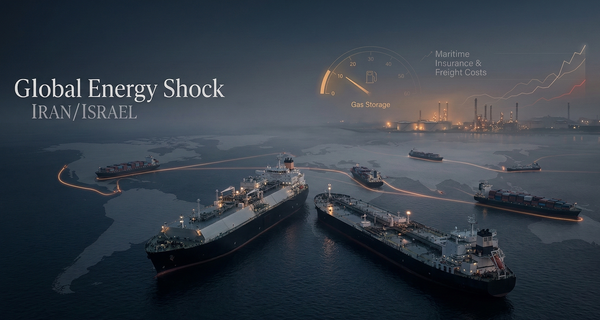
The real wartime “cheat code,” if the phrase is to be used at all, is boring infrastructure. The defensible assets in a conflict-heavy world are the systems that keep daily life and commercial activity functioning: reliable electricity, grid upgrades, storage, ports, warehousing, cold chain, and payment rails. UN Trade and Development expects maritime trade growth to stall under persistent uncertainty, while the IEA shows that energy capital is still rotating toward power systems and electrification. That combination tells allocators something important: the premium is moving toward resilience, not spectacle.
This is also why sustainability has become a security story. In fragile periods, “green” is not persuasive because it sounds virtuous. It is persuasive when it reduces fuel-import dependence, lowers grid fragility, protects food affordability, or stabilizes basic service delivery. The FAO reports that a 10% increase in food prices is associated with a 3.5% rise in moderate or severe food insecurity in low-income countries. The IEA, meanwhile, shows capital continuing to favor grids, storage, efficiency, and electrification. The practical lesson is that resilience assets can also be political-stability assets.
That does not mean every emerging or frontier market becomes attractive in wartime conditions. Quite the opposite. The World Bank’s latest work frames frontier markets as a subset of emerging market and developing economies with limited but growing integration into global financial markets. In a more fragmented world, that makes selectivity more important, not less. The jurisdictions that stand out are usually the ones that combine three traits at once: political legibility, locally grounded execution, and contractual de-risking. Research from the World Bank shows that foreign investment has become more sensitive to geopolitical alignment and friendshoring logic over time.
The capital-flow backdrop reinforces that point. UNCTAD says global FDI fell 11% in 2024 to $1.5 trillion on an adjusted basis, marking a second consecutive year of decline in productive investment flows. Its January 2026 Trends Monitor estimated a rebound in headline global FDI to $1.6 trillion in 2025, but also stressed that the increase was concentrated in developed economies and financial centers while new project announcements remained weak amid elevated policy uncertainty. Scarce capital is still moving, but it is moving toward corridors where due diligence is easier, counterparties are clearer, and legal protections are more credible.
For allocators, this points to a useful cross-region framework.
In ASEAN-type middle corridors, the strongest resilience stories are tied to manufacturing relocation, industrial parks, distributed power, and export logistics. The regional backdrop is comparatively firm, with East Asia and Pacific growth projected around 4.8% in 2026, but growth alone is not the screening tool. The question is whether industrial land, power reliability, customs capacity, and dispute resolution are good enough to convert friendshoring interest into actual cash flow.
In Africa and parts of MENA, the relevant themes are ports, warehousing, food systems, FX-earning exports, and energy-security infrastructure. The World Bank projects Sub-Saharan Africa at about 4.3% growth in 2026 and MENA around 3.6%, but it also warns that 20 Sub-Saharan African economies are in, or at high risk of, debt distress. That is the central tension. The opportunity set can be real, but only when revenue quality is strong enough to survive FX pressure, refinancing risk, and policy reversals.
In Latin America and Eastern Europe, the story is somewhat different. Growth forecasts are lower, around 2.3% for Latin America and the Caribbean and 2.4% for Europe and Central Asia in 2026, yet these corridors can still be highly relevant because proximity, logistics positioning, legal familiarity, and reconstruction-linked demand can outweigh headline growth gaps. In practical terms, that can make nearshoring, cold chain, payments infrastructure, logistics, and power reliability more compelling than more exotic frontier narratives.
The discipline, however, has to move beyond themes and into capital reality.
First, where does the cash come from? In tougher markets, it often comes from a layered stack: DFIs and MDBs, regional banks, sovereign-linked pools, strategic corporates, family offices, local pensions, and diaspora capital. IFC notes that blended finance works by mitigating specific investment risks, lowering financing costs, and rebalancing risk-reward profiles for projects that would not otherwise clear commercial hurdles. OECD research on risk-mitigation instruments in EMDE clean-energy finance points in the same direction, highlighting guarantees, insurance, hedging products, and other tools designed to address macro, FX, and offtake risks.
Second, in what currency does the model really work? This is often the line between a durable structure and a fragile one. Capital may arrive in dollars or euros, but revenues are frequently local-currency unless they are export-linked, tariff-indexed, or hard-currency contracted. The World Bank’s frontier-markets work underscores that shallow domestic capital markets remain a structural constraint in many of these economies. So the durable wartime play is not simply finding demand. It is matching liabilities, contracts, and collections in a way that can survive a currency shock.
Third, what is the actual return mechanism? The stronger ones are usually plain to explain and hard to replace: tariffs, power-purchase agreements, leases, throughput fees, storage charges, take-or-pay contracts, export offtake, or transaction fees on essential payment infrastructure. The closer the asset sits to a real bottleneck, the more robust the case tends to be. That is why resilience allocation under geopolitical stress looks less like chasing volatility and more like underwriting enforceable cash flows.
Then comes the question serious allocators ask before the marketing deck appears: what breaks first?
Usually it is not the headline thesis. It is the plumbing. FX mismatches, refinancing stress, tariff freezes, subsidy withdrawal, weak offtakers, sanctions exposure, shipping disruption, land-title ambiguity, or an abrupt political intervention are what turn an attractive resilience story into an expensive lesson. UNCTAD’s maritime work makes clear that logistics disruption remains a live risk channel, Reuters’ latest reporting shows how quickly energy shocks can destabilize EM currencies and rate expectations, and the World Bank’s debt-distress warning for Sub-Saharan Africa is a reminder that sovereign fragility can move from background risk to immediate deal risk with little notice.
There is also a reputational line that serious capital cannot ignore. A sophisticated allocator is not trying to monetize conflict itself. The job is to identify where essential systems still need capital, where governance is legible enough to protect that capital, and where the social utility of the asset is aligned with the economics. In practice, that means preferring continuity over extraction, contracts over slogans, and operating credibility over frontier romance. The wartime wealth play, in other words, is not aggression. It is disciplined resilience.
Sources: IMF World Economic Outlook Update, January 2026; World Bank Global Economic Prospects, January 2026, including the frontier markets chapter and regional analyses; UNCTAD World Investment Report 2025, Global Investment Trends Monitor January 2026, and Review of Maritime Transport 2025; IEA World Energy Investment 2025; SIPRI military expenditure data for 2024; FAO State of Food Security and Nutrition 2025; Reuters reporting from March 13, 2026, on emerging-market flows and the current oil-shock transmission.
“This article is general information, not personal investment, tax, or legal advice. It reflects conditions and data available as of March 2026. I-Invest Magazine and the author do not receive compensation from entities mentioned unless explicitly stated. Readers should obtain independent professional advice before taking action.”